

Health and Safety inspections are an important part of ensuring workplaces are safe, employees are protected and businesses are meeting their legal responsibilities.
For employers across Wales, understanding what an inspection involves and knowing whether your current arrangements are up to scratch can make a real difference.
The Health and Safety Executive (HSE) continues to carry out targeted workplace inspections across Great Britain, focusing on industries, activities and risks where improvements are needed.
So, whether you’ve received notification of an inspection, want to review your current arrangements or simply want to make sure your business is prepared, here’s what you need to know.
Why are HSE inspections taking place?
The HSE is responsible for enforcing workplace Health and Safety legislation across a range of industries.
Rather than inspecting every business routinely, inspections are often targeted towards particular industries, activities or workplace risks.
These visits help inspectors assess how effectively businesses are managing Health and Safety and whether employers are meeting their legal responsibilities.
HSE’s 2026/27 performance targets include 14,000 proactive inspections, demonstrating the continued importance of workplace safety and regulatory compliance.
Inspections may also take place following:
- A workplace accident or incident.
- A complaint about unsafe working conditions.
- Concerns about how particular risks are being managed.
- A targeted inspection campaign within a specific industry.
It’s worth remembering that Health and Safety enforcement in Wales is shared between the HSE and local authorities. The enforcing authority depends on the type of business and its activities.
What happens during an HSE inspection?
An inspection can feel daunting if you haven’t experienced one before, but understanding what to expect can help you prepare.
Inspectors may visit without giving advance notice and have legal powers to enter workplaces at reasonable times.
During a visit, an inspector may:
- Walk around your workplace and observe working conditions.
- Review machinery, equipment and working practices.
- Ask questions about how Health and Safety is managed.
- Speak with employees and their representatives.
- Review risk assessments, policies and other documentation.
- Take photographs or samples where appropriate.
The purpose is to assess whether suitable arrangements are in place to protect employees and anyone else who could be affected by the business’s activities.
An inspector may also provide advice and guidance or take formal enforcement action where necessary.
7 things to check before an HSE inspection
You shouldn’t wait until an inspector arrives to review your Health and Safety arrangements.
Regular reviews can help identify gaps, improve working practices and ensure your business is meeting its responsibilities.
Here are seven areas worth checking.
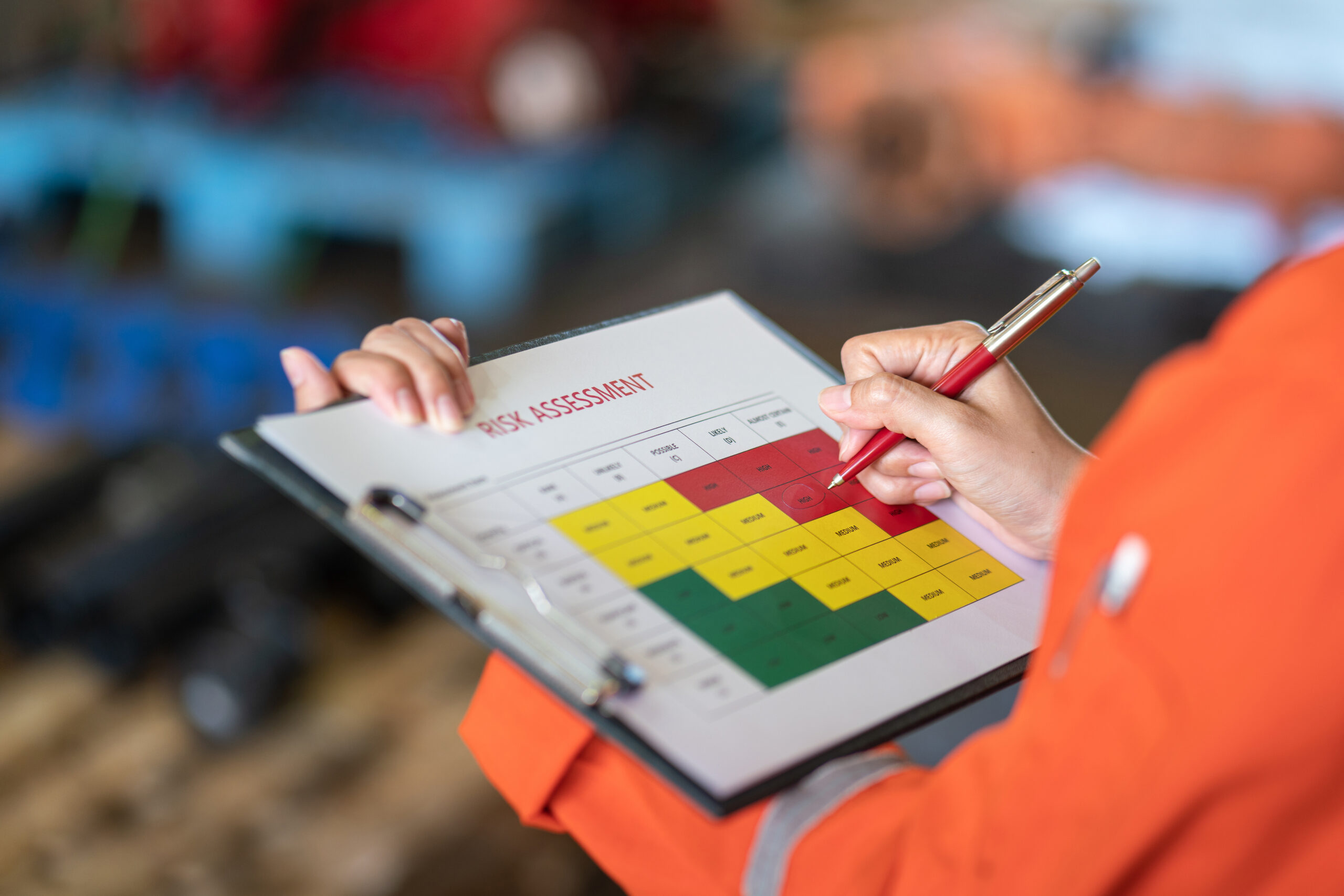
Are your risk assessments up to date?
Risk assessments should identify potential hazards, assess the risks and explain the measures in place to control them.
Check that:
- Risk assessments cover your current workplace activities.
- Control measures are being followed.
- Changes to equipment, processes or working environments have been considered.
- Employees understand the risks relevant to their roles.
A risk assessment should reflect what actually happens in your workplace, not simply be a document kept in a folder.
Do you have a suitable Health and Safety policy?
Employers with five or more employees must have a written Health and Safety policy.
Your policy should explain your approach to managing Health and Safety, including who is responsible for different areas and how arrangements are implemented.
Make sure it is current, accessible and understood by the relevant people.
Is your Health and Safety documentation in order?
An inspector may want to see evidence of how your business manages workplace safety.
Depending on your activities, this could include:
- Health and Safety policies.
- Risk assessments.
- COSHH assessments.
- Accident records.
- Training records.
- Equipment maintenance records.
- Inspection and monitoring documentation.
- Relevant procedures and safe systems of work.
Having documents in place is important, but they also need to reflect the way your business operates.
Have employees received appropriate training?
Employees should receive suitable information, instruction, training and supervision to carry out their work safely.
Consider whether:
- New starters receive appropriate induction training.
- Employees understand workplace hazards.
- Relevant refresher training is completed.
- Managers understand their Health and Safety responsibilities.
- Training records are maintained.
Is workplace equipment safe?
Machinery, equipment and work areas should be maintained in a safe condition.
Review whether equipment is being inspected and maintained appropriately, whether suitable guarding is in place and whether employees understand how to use equipment safely.
Where applicable, consider statutory inspection requirements and maintenance schedules.
Are you managing specific workplace risks?
Different industries face different Health and Safety challenges.
Depending on your business, you may need to consider:
- COSHH and hazardous substances.
- Manual handling.
- Working at height.
- Fire safety.
- Asbestos management.
- Workplace transport.
- Machinery safety.
- Noise and occupational health.
- Respiratory protective equipment.
Don’t assume that having a general Health and Safety policy covers every risk associated with your business.
Do you have competent Health and Safety support?
Employers must appoint one or more competent people to help them meet their Health and Safety responsibilities.
This could be someone within the business or an external Health and Safety consultant.
If you don’t have the necessary knowledge or experience internally, external support can help you identify gaps, review documentation and develop practical arrangements that work for your business.
What happens if an inspector identifies problems?
If an inspector identifies concerns, the action taken will depend on the nature and seriousness of the issue.
This could include:
- Verbal or written advice: Guidance on improvements that should be made.
- Improvement notice: A formal requirement to address a breach of Health and Safety legislation within a specified period.
- Prohibition notice: Used where an activity presents a risk of serious personal injury. The activity must stop until the required action has been taken.
- Prosecution: More serious breaches may result in prosecution.
Businesses should take any concerns raised during an inspection seriously and act promptly to address them.
How Effective HRM can support your business
Managing Health and Safety responsibilities can be challenging, particularly for businesses without a dedicated in-house specialist.
At Effective HRM, we provide practical Health and Safety support to help businesses understand their responsibilities, manage workplace risks and maintain appropriate arrangements.
Our team can help with:
- Health and Safety audits and reviews.
- Workplace risk assessments.
- Health and Safety policies and documentation.
- Ongoing Health and Safety advice.
- Identifying areas for improvement.
- Developing practical Health and Safety management arrangements.
Whether you need a one-off review or ongoing support, we can help you take a more proactive approach to workplace safety.
Want to feel more confident about your Health and Safety arrangements?
Speak to the Effective HRM team to find out how we can support your business.